
Travel guide
The Best Time to Visit Sri Lanka
Sri Lanka has two monsoons, so there is no single best month — there is a best coast for each month. A region-by-region breakdown of when to go, what the weather actually does, and how to plan around it.
There is no single best month to visit Sri Lanka, because two monsoons hit opposite coasts at opposite times. December to March suits the south and west coasts and the Cultural Triangle. May to September suits the east and north-east. The hill country and ancient cities work year-round.
Why "the best time" is the wrong question
Almost every article about Sri Lankan weather starts by naming a season, and almost every one is misleading. The island sits in the path of two separate monsoon systems that arrive at different times and hit different sides of the country. When one coast is unusable, the other is at its best.
The southwest monsoon (Yala) runs roughly May to September and brings rain to the west and south coasts and the western slopes of the hill country. The northeast monsoon (Maha) runs roughly October to January and brings rain to the east, north-east and north.
The practical consequence is that Sri Lanka has no closed season. It has a correct itinerary for every month — and the mistake travellers make is booking the wrong coast rather than the wrong month.
| Months | Best regions | Avoid or expect rain |
|---|---|---|
| December – March | South & west coasts, Cultural Triangle, hill country | East coast, Trincomalee, Arugam Bay |
| April | Almost everywhere — a brief sweet spot between monsoons | Very hot inland; Sinhala/Tamil New Year crowds |
| May – September | East & north-east: Trincomalee, Nilaveli, Arugam Bay, Kalpitiya | South & west coasts, Galle, Mirissa |
| October – November | Transitional; Cultural Triangle still reliable | Both coasts can be wet; the least predictable period |
December to March — the classic season
This is peak season and the period most visitors mean when they talk about the best time to go. The south and west coasts are dry and calm, which makes it the window for Galle, Mirissa, Unawatuna and Bentota. Blue whale watching off Mirissa runs through it. The Cultural Triangle is dry and comfortable, and the hill country is at its clearest.
The trade-offs are price and crowding. Hotels on the south coast charge their highest rates, the better properties book out weeks ahead, and Sigiriya and Galle Fort are busy. Late December and early January are the most expensive fortnight of the year.
If you want the classic Sri Lanka itinerary — ancient cities, hill country, southern beaches — this is when to do it, and it is worth booking early rather than well.
April — the brief window when everything works
April sits between the two monsoons and is, on paper, the best month in the country: both coasts are largely dry, the sea is calm on either side, and visibility in the hills is good.
Two caveats. It is the hottest month, and the Cultural Triangle in April is genuinely punishing at midday — Sigiriya in the early afternoon is an unpleasant climb. And mid-April brings the Sinhala and Tamil New Year, the biggest holiday of the year, when domestic tourism peaks, hill-country hotels fill with Sri Lankan families, and prices in places like Nuwara Eliya rise sharply.
For a first trip covering multiple regions, April is arguably the strongest month, provided you start early each day.
May to September — go east
This is where most bad Sri Lanka trips originate. Travellers book July because that is when they have leave, plan a south coast beach stay, and arrive to rough water and rain in Mirissa.
The correct July or August itinerary runs the Cultural Triangle, the hill country, and then east: Trincomalee and Nilaveli for calm sea and white sand, or Arugam Bay for the surf season, which is at its peak precisely then. Kalpitiya on the north-west coast has its strongest kitesurfing wind in these months.
The rain on the south-west is also less absolute than the label suggests. It usually arrives as heavy afternoon downpours rather than all-day drizzle, and Galle Fort in the wet is atmospheric. But the sea is genuinely rough and swimming is often unsafe, so a beach holiday is the thing to move rather than the trip itself.
October and November — the honest gap
The inter-monsoon period is the least predictable stretch of the year, with rain possible on both coasts and thunderstorms common. It is the one time we sometimes suggest a different month if a client has flexibility.
That said, it has real advantages: the lowest prices of the year, empty sites, and a landscape that is green rather than parched. The Cultural Triangle stays relatively reliable because it sits in the dry zone. If you are willing to accept some rain in exchange for having Sigiriya nearly to yourself, it is a reasonable trade.
Timing for specific things
Some experiences are tied to a narrower window than the general weather:
- Blue whale watching, Mirissa — roughly November to April, best December to March
- Whale watching, Trincomalee — roughly June to September
- Surfing, Arugam Bay — May to September, peaking July and August
- Surfing, south coast (Weligama, Hikkaduwa) — November to April
- Kitesurfing, Kalpitiya — main season May to September, second season December to March
- Leopards at Yala — February to July, when water is scarce and animals concentrate
- The Gathering (elephants at Minneriya/Kaudulla) — roughly July to October
- Liveaboard diving, south-west — December to April
- Kandy Esala Perahera — July or August, dates set by the lunar calendar
- Sinhala and Tamil New Year — mid-April; expect closures and domestic crowds
Frequently Asked Questions
- What is the overall best month to visit Sri Lanka?
- If you want one answer, February. The south and west coasts are dry and calm, the Cultural Triangle is comfortable, the hill country is clear, whale watching off Mirissa is at its best, and Yala is entering its strongest leopard season. April is arguably better for covering both coasts but is significantly hotter and includes the New Year holiday crowds.
- Can you visit Sri Lanka during the monsoon?
- Yes — there is no month when the whole island is unsuitable. The two monsoons hit opposite coasts at opposite times, so the question is which coast to visit rather than whether to come. In July or August, go east to Trincomalee or Arugam Bay rather than south to Mirissa.
- Is July a bad time to visit Sri Lanka?
- Only if you plan the wrong route. July is poor for the south and west coasts, which are under the southwest monsoon with rough seas. It is excellent for the east coast — Trincomalee and Nilaveli are calm and dry, Arugam Bay is at the peak of its surf season, and it coincides with the elephant Gathering at Minneriya and, some years, the Kandy Esala Perahera.
- When is the cheapest time to visit Sri Lanka?
- May, and October to November. These are the shoulder and inter-monsoon periods when hotel rates fall and sites are quiet. October and November are the least predictable weather of the year; May is a good deal if you focus on the east coast and the Cultural Triangle rather than the south.
- How hot does Sri Lanka get?
- Coastal and lowland areas sit around 27–32°C year-round with high humidity, peaking in March and April. The Cultural Triangle can exceed 35°C in April. The hill country is much cooler — Nuwara Eliya at 1,868 m drops to 5–10°C overnight, which surprises most first-time visitors.
Tours to consider
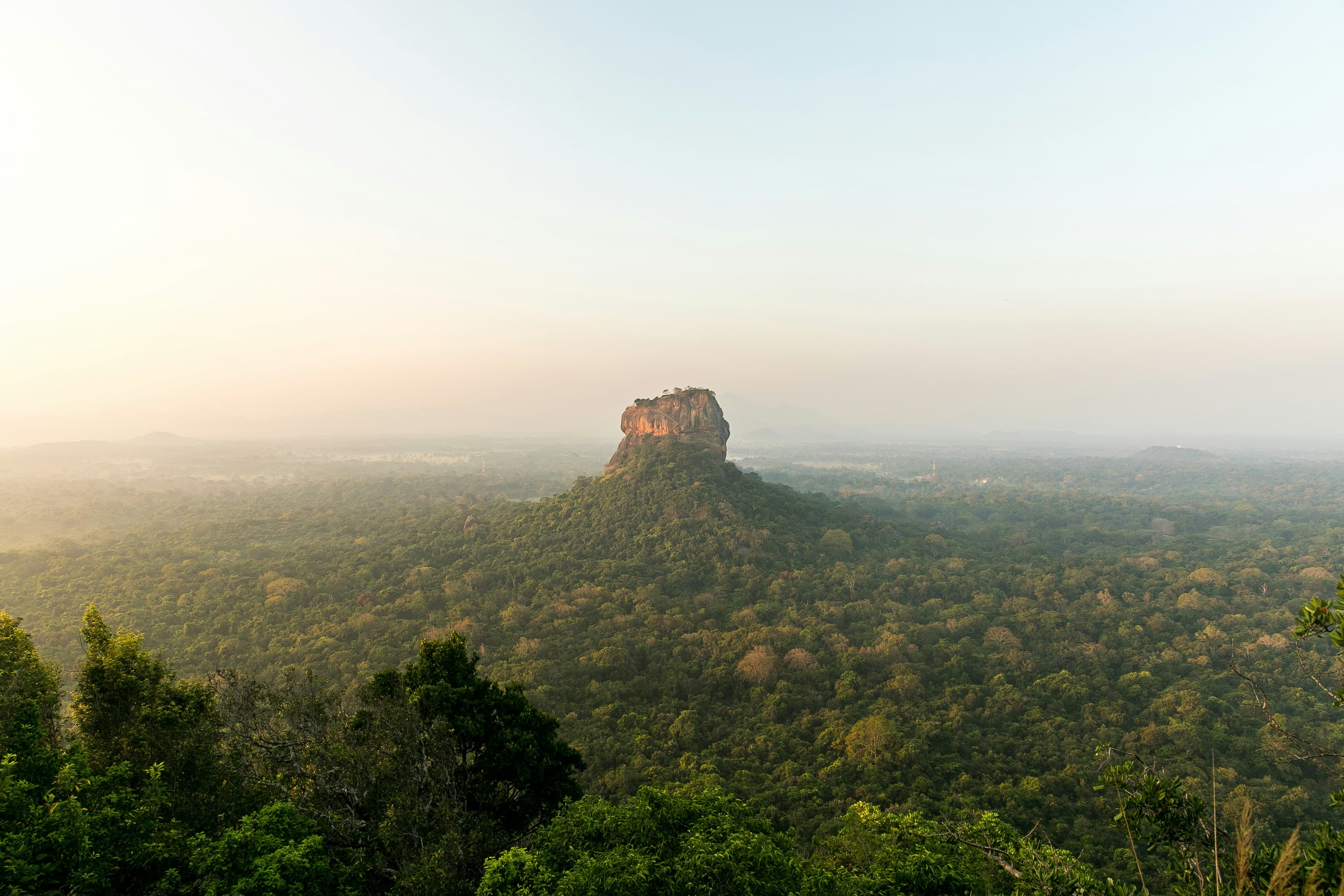
15 days · from $4,050
15 Days / 14 Nights Around Sri Lanka Tour
A comprehensive 15-day journey exploring ancient kingdoms, sacred sites, tea plantations, wildlife, and pristine beaches.
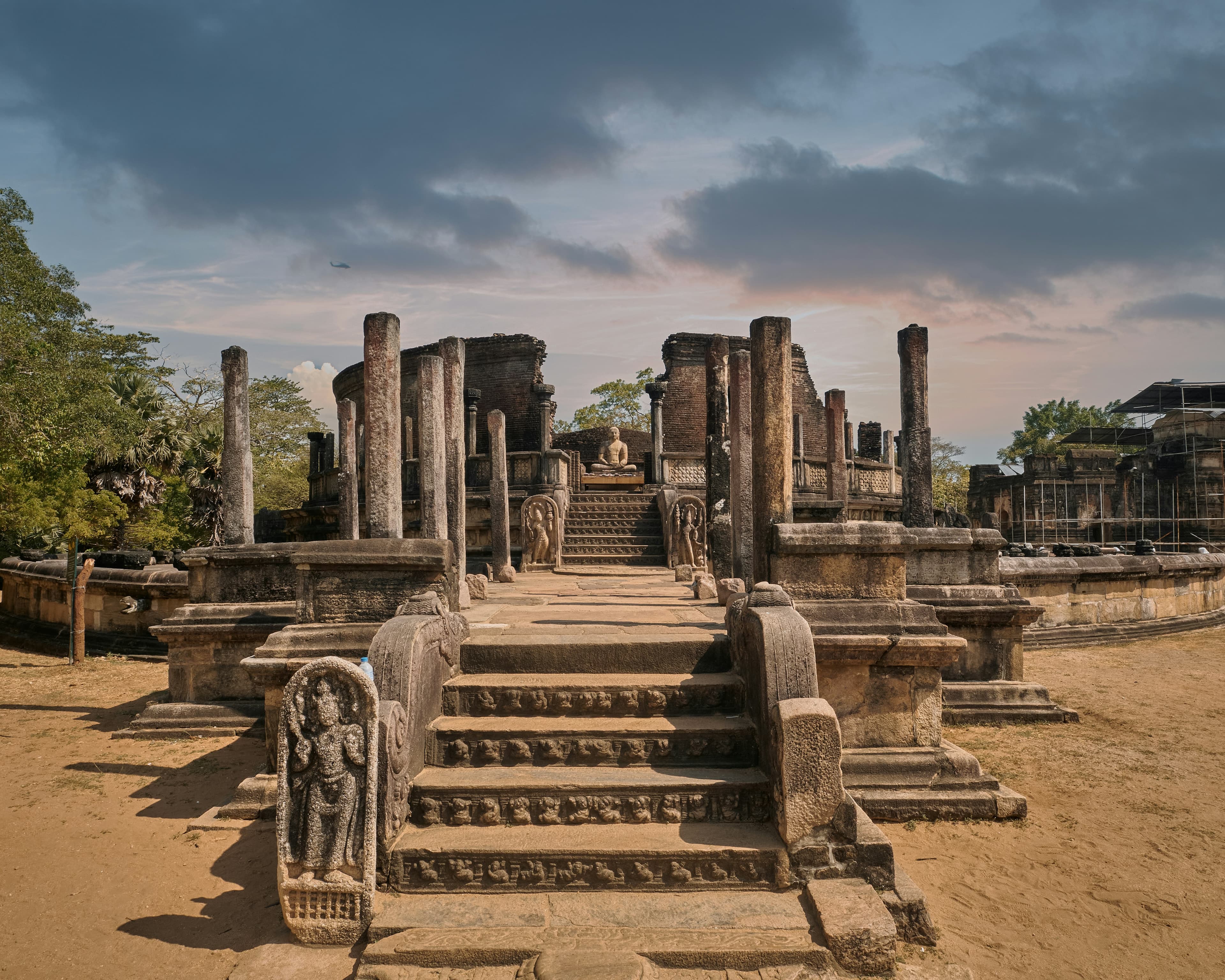
5 days · from $1,350
Classic Cultural Triangle Tour
A classic introduction to Sri Lanka’s rich cultural heritage. Visit the UNESCO ancient cities.
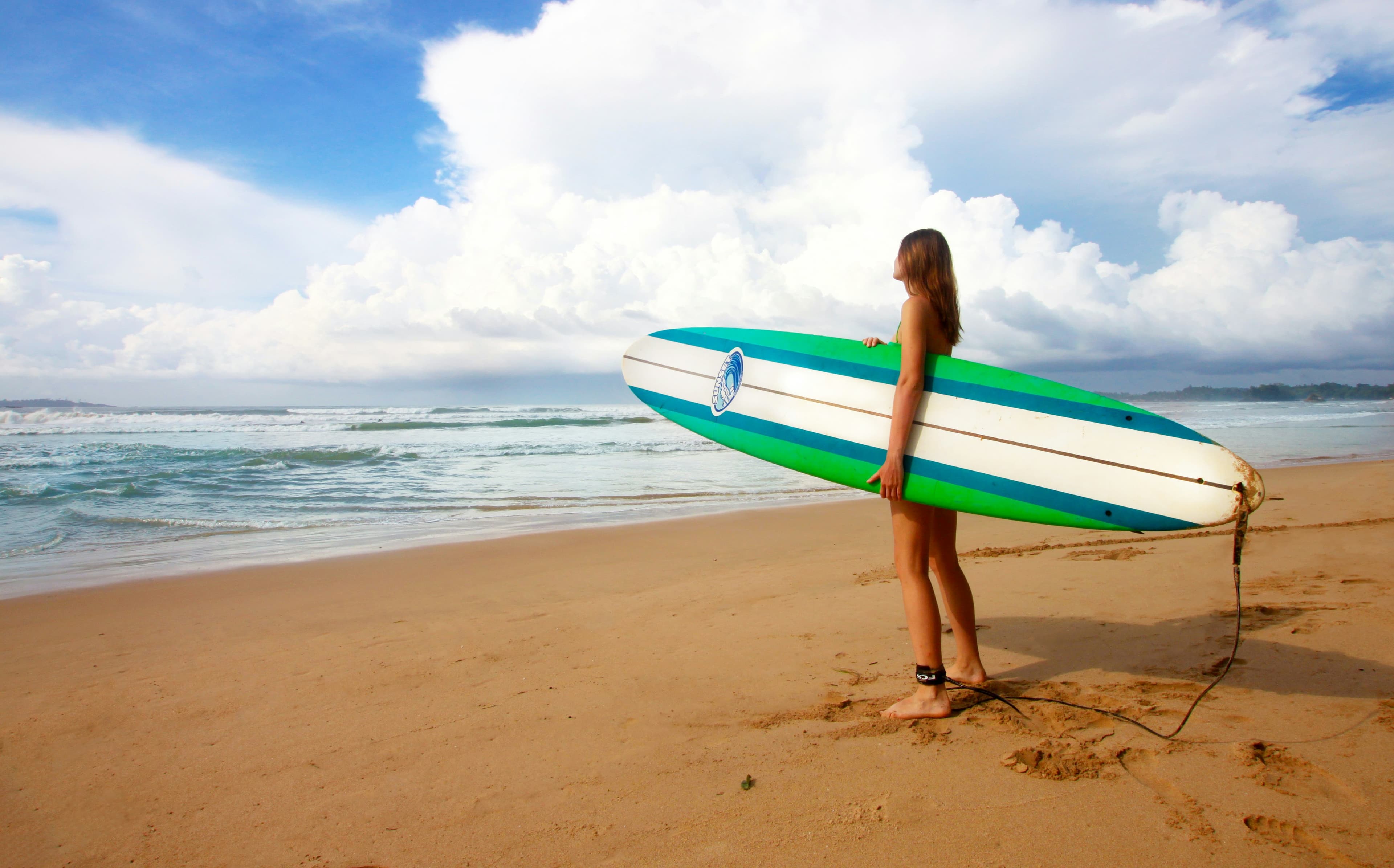
10 days · from $2,700
Sun, Sand & Surf – Coastal Bliss
A relaxing 10-day tour exploring Sri Lanka's stunning southern coast, featuring surfing, beach relaxation, and vibrant nightlife.
Destinations mentioned

Southern Province
Mirissa
Mirissa is a crescent beach town on Sri Lanka's south coast and the country's main base for blue whale watching, which runs roughly November to April. Boats leave around 06:30 and trips take three to five hours. The beach itself is relaxed, with good swimming outside monsoon season.

Eastern Province
Trincomalee
Trincomalee on Sri Lanka's north-east coast has one of the largest natural harbours in the world, the Hindu temple of Koneswaram on a clifftop above it, and the calm white-sand beaches of Nilaveli and Uppuveli nearby. The season runs May to September — the inverse of the south coast.
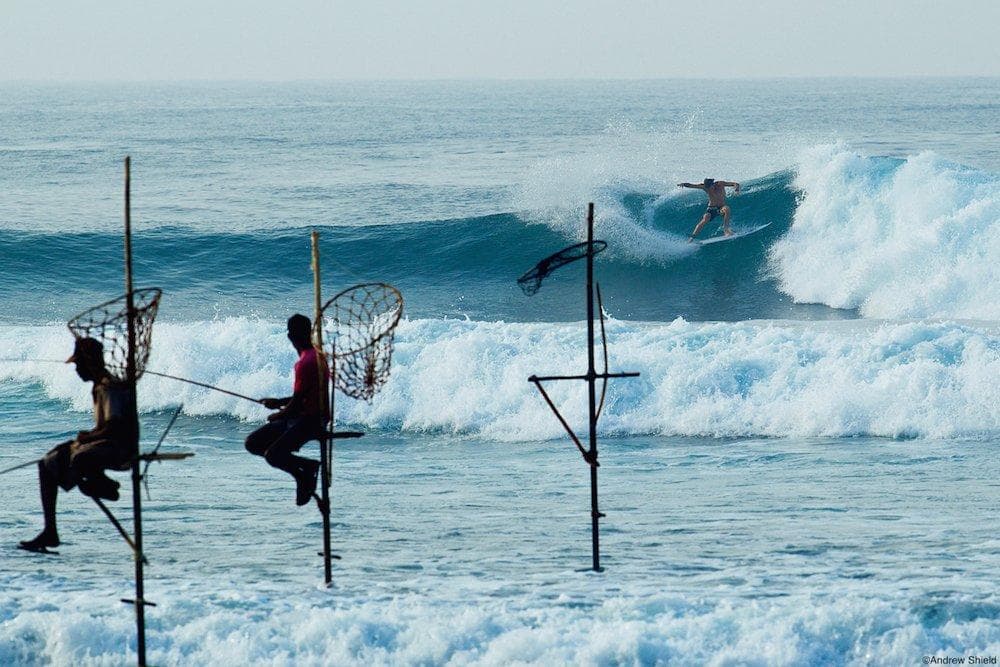
Eastern Province
Arugam Bay
Arugam Bay on Sri Lanka's east coast is the country's best surf destination, centred on a right-hand point break that works from roughly May to September. Several breaks nearby suit all levels. Out of season it is very quiet — the swell and most of the businesses disappear.

Southern & Uva Provinces
Yala National Park
Yala National Park in south-east Sri Lanka has one of the highest densities of leopards anywhere in the world, alongside elephants, sloth bears and crocodiles. Block 1 is the most productive for leopard sightings and the busiest. February to July is the best period, when water is scarce and animals concentrate.
Related guides
Guide
How Much Does a Trip to Sri Lanka Cost?
What a Sri Lanka trip actually costs, broken down by travel style: backpacking, mid-range independent, and private guided touring. Includes flights, visas, park fees and what tour prices do and do not cover.
Guide
What to Pack for Sri Lanka
A packing list built around what Sri Lanka actually demands: temple dress codes, hill-country cold that surprises everyone, monsoon rain, safari dust and leeches in the rainforest.
Guide
The 10-Day Sri Lanka Itinerary Most People Should Book
Ten days is the sweet spot for a first Sri Lanka trip: ancient cities, hill country, a safari and the south coast, without a hotel change every night. Day-by-day route with real driving times.