
North Central Province
Polonnaruwa
Polonnaruwa was Sri Lanka's capital in the 11th–13th centuries and is the most compact and best-preserved of the ancient cities. Home to the Gal Vihara rock Buddhas. Coverable in half a day.
Polonnaruwa was Sri Lanka's medieval capital from the 11th to 13th centuries and is the best-preserved of the ancient cities. Its highlight is the Gal Vihara — four colossal Buddha figures carved from a single granite wall. The site is compact enough to cover in three to four hours, often by bicycle.
| What it is | Sri Lanka's medieval capital, 11th–13th centuries CE |
|---|---|
| Status | UNESCO World Heritage Site (inscribed 1982) |
| Best known for | Gal Vihara — four Buddha figures carved from one granite face |
| Site size | Compact; walkable in parts, ideal by bicycle |
| Time needed | 3–4 hours |
| Peak ruler | Parakramabahu I (reigned 1153–1186) |
| From Sigiriya | About 1 to 1.5 hours by road |
| Dress code | Shoulders and knees covered; shoes off at Gal Vihara and other sacred areas |
About Polonnaruwa
After Anuradhapura fell to invasion in 1017, the capital moved south-east to Polonnaruwa. The city's great period was short — barely two centuries — but it was extraordinarily productive, and because it was abandoned relatively quickly and then swallowed by forest, what survives is unusually intact.
The city peaked under Parakramabahu I in the 12th century, a ruler whose ambition is written across the site: a royal palace said to have had seven storeys, a vast artificial lake still called the Parakrama Samudra ("Sea of Parakrama"), and an irrigation network so effective that his declaration that no drop of rain should reach the sea unused is still quoted in Sri Lanka today.
Compared with Anuradhapura, Polonnaruwa is a pleasure to visit: everything sits within a manageable area, the ruins are legible rather than fragmentary, and the sculpture is world class. Many visitors cover it by bicycle in a single morning.
What to see in Polonnaruwa
Gal Vihara
Four Buddha images cut from a single wall of granite in the 12th century: a seated figure, a smaller seated figure in a cave, a 7-metre standing figure, and a 14-metre reclining Buddha. Widely regarded as the finest stone sculpture in Sri Lanka.
The Quadrangle (Dalada Maluwa)
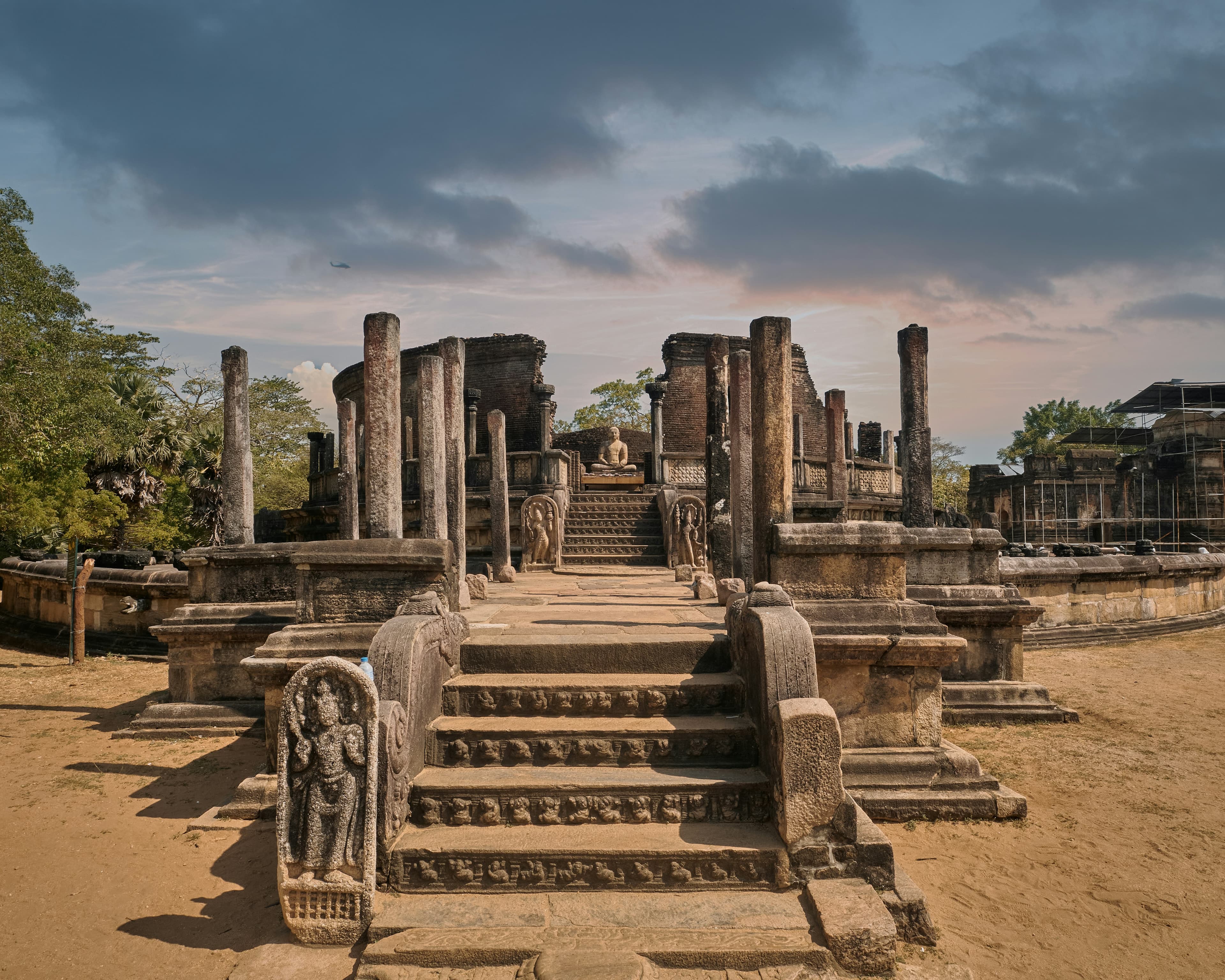
A raised terrace holding a dense cluster of the city's most refined religious buildings, including the circular Vatadage with its guardstones and moonstones.
Rankoth Vehera
The largest stupa at Polonnaruwa, built in the style of the great Anuradhapura dagobas and rising over 50 metres.
Lankatilaka
A towering brick image house, roofless now, with walls 17 metres high framing a huge standing Buddha whose head is lost.
The Royal Palace of Parakramabahu
Thick brick walls with beam holes still visible, evidence of the upper storeys that chronicles describe.
Parakrama Samudra
A 12th-century reservoir covering some 2,500 hectares, still irrigating farmland eight centuries later. Pelicans and elephants are both regular sights along its shore.
Best time to visit
Year-round; the dry zone location makes it reliable. Early morning is best — the site has little shade and the Gal Vihara sculptures are at their most beautiful in low, raking light. December to March is the most comfortable stretch.
Getting there
About 1 to 1.5 hours by road from Sigiriya or Dambulla, and roughly 5 hours from Colombo. Most visitors come as a day trip from a Cultural Triangle base rather than staying in Polonnaruwa itself.
How long to spend
Three to four hours for the site. A full day if you combine it with a Minneriya or Kaudulla safari in the afternoon, which is a common and effective pairing.
Seeing the site by bicycle
Polonnaruwa is the one ancient city where cycling genuinely works. The monuments sit along a few kilometres of shaded road, bicycles are cheap to hire at the entrance, and the flat terrain makes it easy. Ridden in the early morning it is one of the more pleasant experiences in the Cultural Triangle.
By late morning the shade thins and the heat becomes serious. If you are not starting early, a vehicle between clusters is the more sensible option — which is what our itineraries default to unless you ask otherwise.
Why Gal Vihara is the reason to come
The four figures at Gal Vihara were carved from one continuous granite face in the 12th century, and the quality of the work is on a different level from anything else on the site. The reclining Buddha is 14 metres long; the subtle depression in the pillow under the head, and the slight give in the sole of the upper foot, are the details people remember.
The standing figure with crossed arms has generated a long scholarly argument — whether it depicts the Buddha in an unusual posture or his grieving disciple Ananda. Nobody has settled it.
The sculptures now sit under a modern protective canopy, which is unlovely but has saved them. Shoes come off, and photography with your back to the figures is not acceptable.
Combining with a wildlife safari
Minneriya and Kaudulla national parks lie within an hour of Polonnaruwa, and between roughly July and October they host "The Gathering" — one of the largest concentrations of wild Asian elephants anywhere, drawn to the receding reservoir grasslands.
The standard pattern is ruins in the morning, safari from mid-afternoon into dusk. Which park you visit depends on where the herds actually are that week, which is a decision best left to a guide with current information rather than fixed in advance.
Polonnaruwa in pictures
Frequently Asked Questions
- How long do you need in Polonnaruwa?
- Three to four hours is enough to see the whole site properly, which is what makes it the easiest of the ancient capitals to fit into an itinerary. Add a Minneriya or Kaudulla safari in the afternoon and it becomes a full, well-balanced day.
- Is Polonnaruwa better than Anuradhapura?
- It is more compact, better preserved and easier to appreciate in a short visit, and the Gal Vihara sculpture is the finest in the country. Anuradhapura is older, larger and more sacred but harder work. If you have one day, most visitors get more from Polonnaruwa; if you have two, do both.
- Can you cycle around Polonnaruwa?
- Yes — it is the ancient city best suited to it. Bicycles are available at the entrance, the roads between monuments are flat and partly shaded, and the distances are modest. Start early; by late morning the heat makes a vehicle far more appealing.
- What is the best time of day to visit?
- Early morning, from opening. The light on the Gal Vihara figures is at its best, the temperature is manageable, and the tour groups arriving from Sigiriya and Dambulla have not yet reached the site.
Tours that visit Polonnaruwa
5 days · from $1,350
Classic Cultural Triangle Tour
A classic introduction to Sri Lanka’s rich cultural heritage. Visit the UNESCO ancient cities.
15 days · from $4,050
15 Days / 14 Nights Around Sri Lanka Tour
A comprehensive 15-day journey exploring ancient kingdoms, sacred sites, tea plantations, wildlife, and pristine beaches.

10 days · from $2,700
The Great Wilderness – Wildlife Odyssey
A comprehensive 10-day wildlife expedition through Sri Lanka's top national parks, from Yala's leopards to Minneriya's elephants.
Nearby destinations
Cultural Triangle (Matale District)
Sigiriya
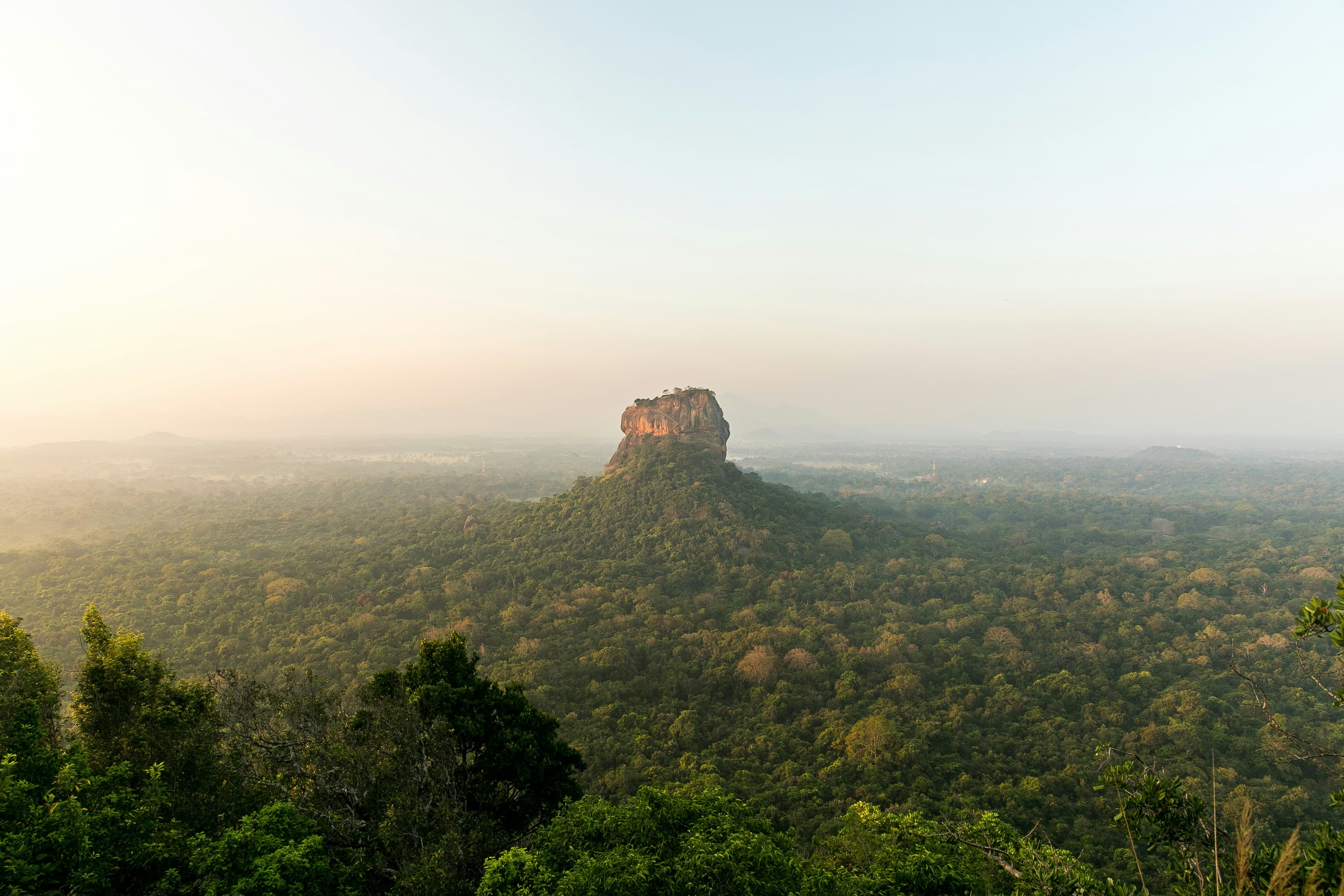
Sigiriya is a 5th-century rock fortress built on a 180-metre granite monolith in central Sri Lanka, and a UNESCO World Heritage Site. The climb is about 1,200 steps and takes 1.5 to 3 hours return. Go at opening or late afternoon — midday heat on exposed stairways is punishing.

Cultural Triangle (Matale District)
Dambulla
Dambulla Cave Temple is a complex of five caves cut into a granite outcrop in central Sri Lanka, holding 153 Buddha statues and roughly 2,100 square metres of painted ceilings. It is a UNESCO site and an active place of worship. Allow 1.5–2 hours, including the 10-minute climb.

North Central Province
Anuradhapura
Anuradhapura was Sri Lanka's capital from the 4th century BCE to the 11th century CE and is the island's most sacred Buddhist city. It holds the Sri Maha Bodhi — grown from a cutting of the tree the Buddha sat under, planted in 288 BCE — and several enormous brick stupas. The site is vast; plan half to a full day.