
North Central Province
Anuradhapura
Anuradhapura was Sri Lanka's capital for over 1,300 years and holds the Sri Maha Bodhi, the oldest documented planted tree on earth. What to see across a sprawling site, and how to cover it without exhausting yourself.
Anuradhapura was Sri Lanka's capital from the 4th century BCE to the 11th century CE and is the island's most sacred Buddhist city. It holds the Sri Maha Bodhi — grown from a cutting of the tree the Buddha sat under, planted in 288 BCE — and several enormous brick stupas. The site is vast; plan half to a full day.
| What it is | Sri Lanka's first capital and most sacred Buddhist city |
|---|---|
| Status | UNESCO World Heritage Site (inscribed 1982) |
| Capital from | 4th century BCE to 1017 CE — over 1,300 years |
| Sri Maha Bodhi | Planted 288 BCE; the oldest human-planted tree with a recorded planting date |
| Site area | Roughly 40 km² — transport within the site is essential |
| Time needed | Half a day minimum; a full day to do it properly |
| Dress code | White or modest clothing; shoulders and knees covered, shoes off at sacred sites |
| From Colombo | About 200 km, 4.5–5 hours by road |
About Anuradhapura
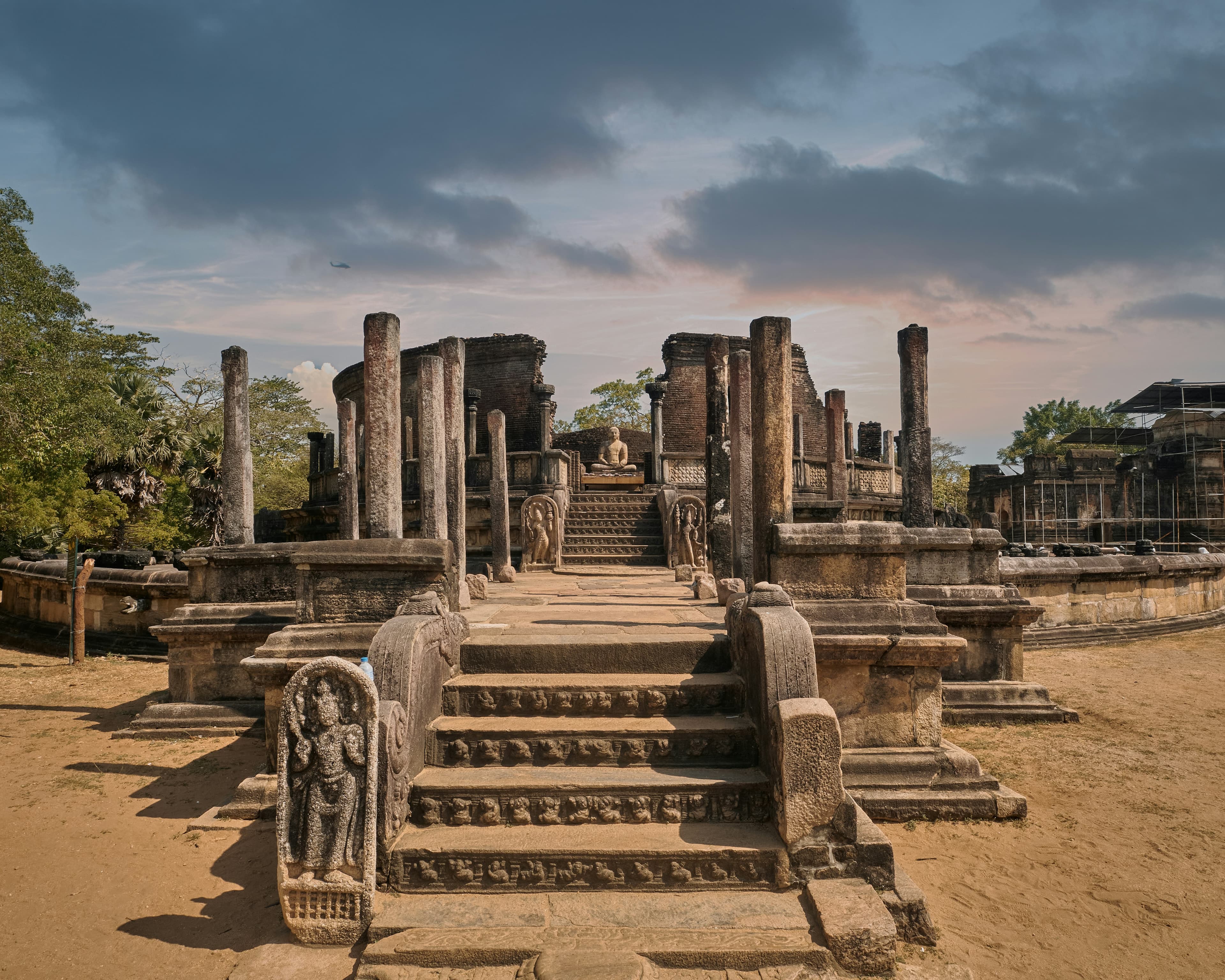
Anuradhapura is not a ruin you walk around in an hour. It was a functioning capital for more than 1,300 years, and the archaeological park sprawls across roughly 40 square kilometres of forest, tanks and open ground. Bicycles or a vehicle are essential; walking between the major monuments is not realistic in the heat.
What makes it different from Polonnaruwa is that Anuradhapura is still profoundly alive as a religious centre. White-clad pilgrims arrive by the busload, particularly on full moon days. At the Sri Maha Bodhi you are standing in a place of continuous worship, not an exhibit — and the atmosphere reflects that.
The scale of the ancient engineering is the other thing that lands. The Jetavanaramaya stupa was, when completed in the 3rd century CE, among the tallest structures in the world — surpassed only by two of the Egyptian pyramids. The reservoirs that fed the city, some over two thousand years old, still irrigate farmland today.
What to see in Anuradhapura
Sri Maha Bodhi
A sacred fig grown from a cutting of the Bodhi tree at Bodh Gaya under which the Buddha attained enlightenment, brought to Sri Lanka by the nun Sanghamitta and planted in 288 BCE. Guarded continuously ever since.
Ruwanwelisaya
A brilliant white stupa of the 2nd century BCE, restored and still one of the most striking sights in the country, especially at dusk when pilgrims circle it with oil lamps.
Jetavanaramaya
A colossal red-brick stupa, once around 120 metres tall and built from an estimated 93 million bricks. Left largely unrestored, which makes its scale easier to feel.
Abhayagiri
The remains of a monastery complex that housed 5,000 monks and functioned as an international centre of Buddhist learning. Quieter than the main sites and rewarding to wander.
Isurumuniya
A rock temple best known for the "Isurumuniya Lovers", a 6th-century carving of a seated man and a woman on his lap — unusually intimate for the period and endlessly debated by art historians.
Mihintale
A hill 12 km east where, in 247 BCE, the monk Mahinda met King Devanampiya Tissa and introduced Buddhism to the island. 1,840 granite steps to the summit; the spot where Sri Lankan Buddhism began.
Best time to visit
Year-round, in the dry zone. Poson Poya (June full moon) commemorates the arrival of Buddhism and fills Anuradhapura and Mihintale with pilgrims — extraordinary to witness, but not the visit to plan if you want quiet contemplation. Start early: shade is scarce and the open ground gets very hot by mid-morning.
Getting there
About 4.5–5 hours from Colombo by road, and around 1.5 hours from Sigiriya or Dambulla. Trains run from Colombo but take considerably longer and leave you needing transport within the site regardless.
How long to spend
A full day to see the main monuments without rushing, or half a day for the highlights. Adding Mihintale properly means an overnight stay in the area.
How to cover a site this large
The monuments are spread over tens of square kilometres of parkland. Most visitors either hire bicycles, which is pleasant in the early morning and brutal by noon, or move between sites by vehicle. Our tours use the vehicle, dropping you at each cluster and picking you up on the far side, which removes the long hot transits without removing the walking that matters.
A sensible order is Sri Maha Bodhi and Ruwanwelisaya first, while you are fresh and before the heat, then Jetavanaramaya, then Abhayagiri and the northern monasteries, finishing at Isurumuniya. Mihintale is best as a separate half-day, ideally at dawn or late afternoon for the climb.
Etiquette at sacred sites
Anuradhapura is an active pilgrimage centre and expectations are stricter than at purely archaeological sites. Shoes and hats come off at the sacred precincts, including on hot sand and stone. Shoulders and knees stay covered. Many Sri Lankan pilgrims wear white, and while visitors are not required to, muted colours are appreciated.
Never turn your back on a Buddha image for a photograph, and do not climb on stupas or statues. These are not tourist conventions — they carry legal consequences in Sri Lanka, and travellers are deported for them most years.
Anuradhapura or Polonnaruwa?
If you only have time for one ancient capital, the choice depends on what you want. Polonnaruwa is compact, better preserved, easier to cover in a morning, and more visually rewarding for sculpture — the Gal Vihara Buddhas alone justify it.
Anuradhapura is older, far larger, less immediately photogenic, and more spiritually significant. It rewards patience and interest in the history. Visitors who like their sites tidy and legible often prefer Polonnaruwa; those who want to feel the weight of two and a half thousand years usually prefer Anuradhapura.
Most of our Cultural Triangle itineraries include both, on consecutive days, because they complement each other rather than repeat.
Anuradhapura in pictures


Frequently Asked Questions
- How long do you need in Anuradhapura?
- Half a day covers the principal monuments — Sri Maha Bodhi, Ruwanwelisaya, Jetavanaramaya and Abhayagiri. A full day lets you add Isurumuniya, the museums and the outlying monasteries without hurrying. Mihintale deserves its own half-day.
- Is Anuradhapura or Polonnaruwa better?
- They are different rather than ranked. Polonnaruwa is compact, well preserved and quicker to see, with outstanding sculpture. Anuradhapura is much older, much larger, and remains a living pilgrimage centre. If you have two days, do both; if you have one and want the more immediately impressive ruins, choose Polonnaruwa.
- Do I need to wear white?
- No. Many Sri Lankan pilgrims wear white and it is customary for them, but visitors are not expected to. What is expected is modest dress — shoulders and knees covered — and removing shoes and hats at sacred precincts.
- Can you cycle around Anuradhapura?
- Yes, and bicycles are widely available. It is genuinely enjoyable at first light and unpleasant after about 10:00, when the open ground between monuments offers almost no shade. If you cycle, start at dawn and finish by late morning.
Tours that visit Anuradhapura
5 days · from $1,350
Classic Cultural Triangle Tour
A classic introduction to Sri Lanka’s rich cultural heritage. Visit the UNESCO ancient cities.
15 days · from $4,050
15 Days / 14 Nights Around Sri Lanka Tour
A comprehensive 15-day journey exploring ancient kingdoms, sacred sites, tea plantations, wildlife, and pristine beaches.
Nearby destinations
Cultural Triangle (Matale District)
Sigiriya
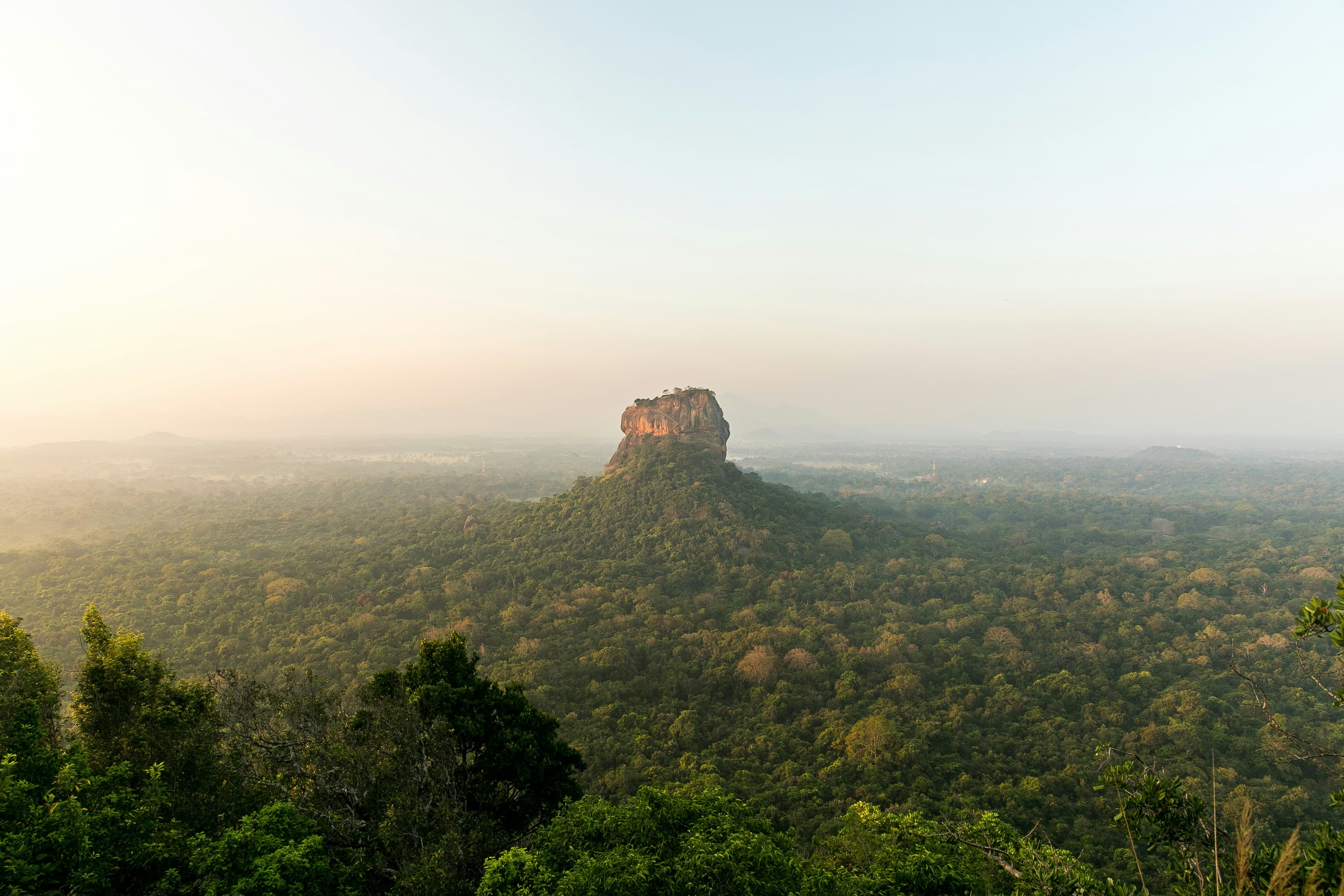
Sigiriya is a 5th-century rock fortress built on a 180-metre granite monolith in central Sri Lanka, and a UNESCO World Heritage Site. The climb is about 1,200 steps and takes 1.5 to 3 hours return. Go at opening or late afternoon — midday heat on exposed stairways is punishing.

Cultural Triangle (Matale District)
Dambulla
Dambulla Cave Temple is a complex of five caves cut into a granite outcrop in central Sri Lanka, holding 153 Buddha statues and roughly 2,100 square metres of painted ceilings. It is a UNESCO site and an active place of worship. Allow 1.5–2 hours, including the 10-minute climb.

North Central Province
Polonnaruwa
Polonnaruwa was Sri Lanka's medieval capital from the 11th to 13th centuries and is the best-preserved of the ancient cities. Its highlight is the Gal Vihara — four colossal Buddha figures carved from a single granite wall. The site is compact enough to cover in three to four hours, often by bicycle.